How to Turn Pinterest Inspiration Into a Real, Cohesive Home
Pinterest is a beautiful rabbit hole. Every photograph has perfect lighting, perfect styling, perfect architecture. But real homes aren't styled for a single photograph. They have kids, pets, homework piles, architectural quirks, and budget limitations that no Pinterest board ever shows you. The gap between what looks beautiful online and what actually works in real life is exactly where most homeowners get stuck. They save hundreds of images and still have no idea what to do next. Here's how to translate Pinterest inspiration into a space that genuinely works, and feels cohesive throughout your whole home.
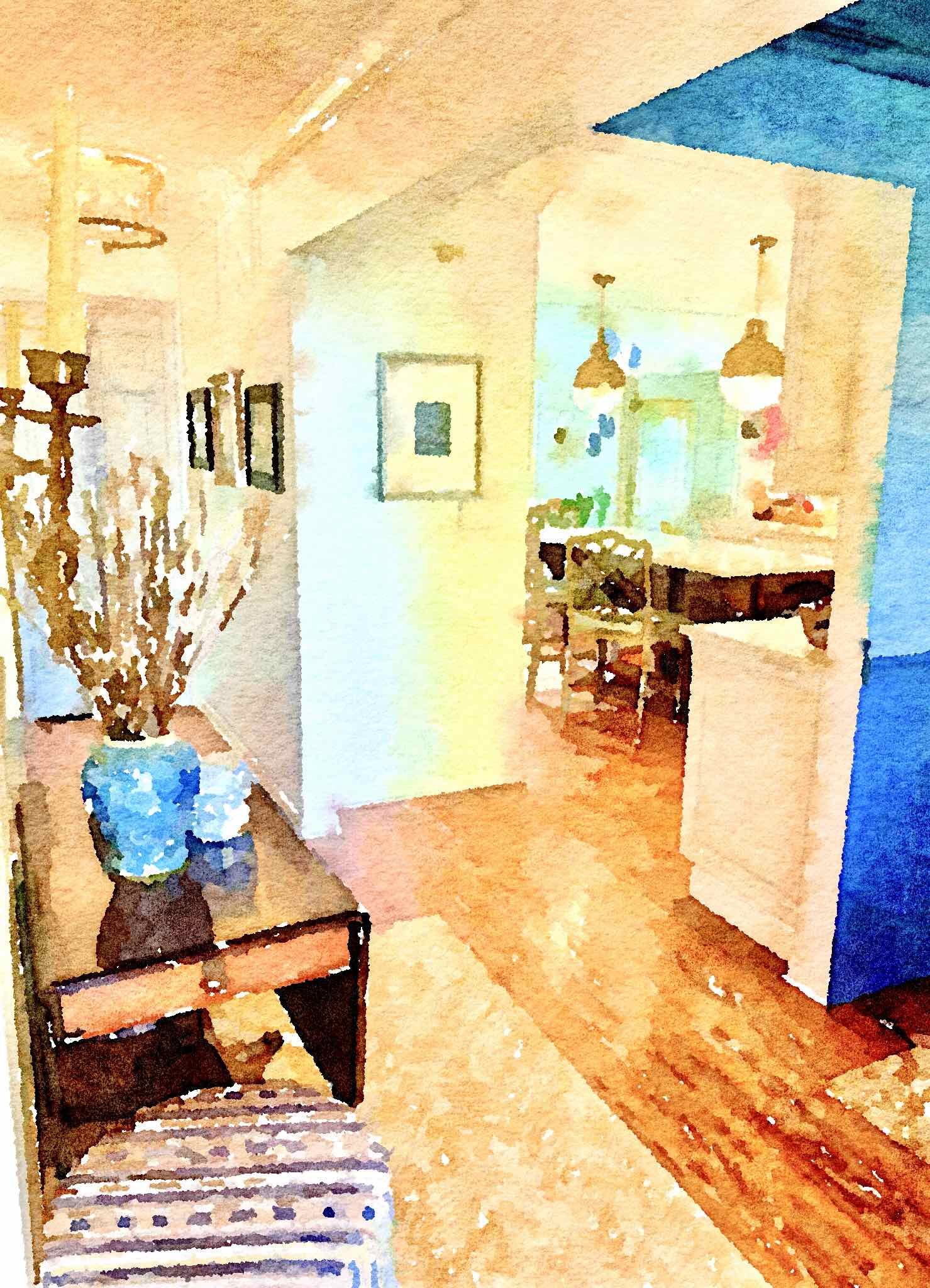
Stop copying and start analyzing
The biggest mistake homeowners make is trying to recreate an image exactly as it appears, but that photo has different lighting than your home, likely has custom millwork, was probably professionally staged, and exists in a completely different architectural context than yours. You can't just lift it and drop it into your living room and expect it to work.
Instead of copying, analyze. Ask yourself what you actually love about the image. Is it the color palette? The symmetry? The mood? The contrast? The sense of simplicity? More often than not, it's not the specific sofa or tile you're drawn to, it's the feeling the room creates. When you can identify those underlying elements, you can translate them into your own space far more successfully than you ever could by trying to recreate the photo piece by piece.
Download the free guide, Why Your Home Still Feels Unfinished, the simple, designer-approved guide that shows you the exact three things to fix first in your home.
Look for patterns in your saves
Open your Pinterest board and instead of evaluating individual pins, scroll and look for repetition. Do you consistently save warm whites over bright whites? Natural wood tones? Brass hardware? Soft blue accents? Tailored traditional silhouettes? The patterns in what you save reveal your true aesthetic even when you feel completely undecided about your style.
This is actually how designers create cohesion. They identify the recurring themes across a client's inspiration and build from there. Your board already holds your answers. You just need to step back far enough to see them clearly.
Consider your existing architecture first
A design that works beautifully in a modern new build may not translate at all into a traditional colonial, and vice versa. Before implementing anything you've saved, take an honest look at your ceiling height, window placement, trim style, flooring tone, and the overall era of your home. Pinterest almost never shows the full architectural context of a space, which makes it easy to fall in love with something that would genuinely fight against the bones of your house.
Your forever home should feel aligned with its architecture, not at odds with it. Adapt the idea to your structure, not the other way around.
Build a whole-home palette
One Pinterest-inspired room in isolation can look absolutely beautiful. However, without a cohesive palette connecting it to the rest of your home, everything around it will feel disconnected and off. Before making any significant purchases, define one to two foundational neutrals, one to two supporting colors, and one to two accent finishes like brass or matte black. This becomes your filter for every decision going forward. If a new idea doesn't fit within that palette, it probably belongs on Pinterest rather than in your home. Constraint creates clarity, and clarity is what makes a home feel designed rather than decorated.
Scale for real life
Pinterest rooms typically feature oversized art, generous rugs, abundant seating, and custom pieces with a lot of breathing room around them. In real life, homeowners frequently scale everything down, and then wonder why the room lost all its impact. If you love a space you've saved, study its proportions carefully. How large is the rug relative to the furniture? How high is the artwork hung? How much negative space exists between pieces? Recreating the scale almost always matters more than replicating the exact items, and it's the step most people skip entirely.
Layer slowly
The most common Pinterest mistake is rushing to complete a room all at once. When you buy everything together and style every surface immediately, you may feel disappointed when the room doesn't look like the image. Instead, start with the foundational pieces: sofa, rug, paint color, lighting. Then live in the space for a while and notice what it actually needs before adding more. A forever home isn't built in a single shopping cart. It's refined over time, and the rooms that feel the most intentional are almost always the ones that were given the time to develop that way.
Pinterest is a tool, not a blueprint. It can spark ideas, clarify your taste, and expand your sense of what's possible, but your home deserves more than imitation. It deserves alignment, cohesion, and thoughtful execution that reflects who you actually are and how you actually live. When you shift from copying images to defining a real vision, your home starts to feel authentic in a way that no Pinterest recreation ever quite manages. Authenticity, more than any specific sofa or tile or paint color, is what makes a home feel truly elevated.
Ready to create a cohesive plan?
If you're drowning in inspiration but not sure how to actually execute it, what you need isn't more ideas, it's a framework. Finally Finished: A Forever Home Blueprint will help you define your true aesthetic direction, create a whole-home color and finish plan, prioritize purchases strategically, and avoid the impulsive Pinterest-driven mistakes that lead to redecorating the same room twice. Stop recreating photos and start designing with real intention. Download the Finally Finished: A Forever Home Blueprint and turn all of that inspiration into a forever home you actually love.