Kid-Friendly Outdoor Spaces That Don't Sacrifice Style
Most backyards end up in one of two camps: the toy-cluttered chaos zone or the precious patio nobody's allowed to touch. Neither one works for a real family. You don't fix that by buying a cuter storage bin or banning the swingset to the back corner. You fix it the same way you fix any room in your house: you build a foundation first, then you decorate. Here’s how to apply foundation-first thinking to your backyard, to design a kid-friendly outdoor space that feels like a backyard retreat for adults.
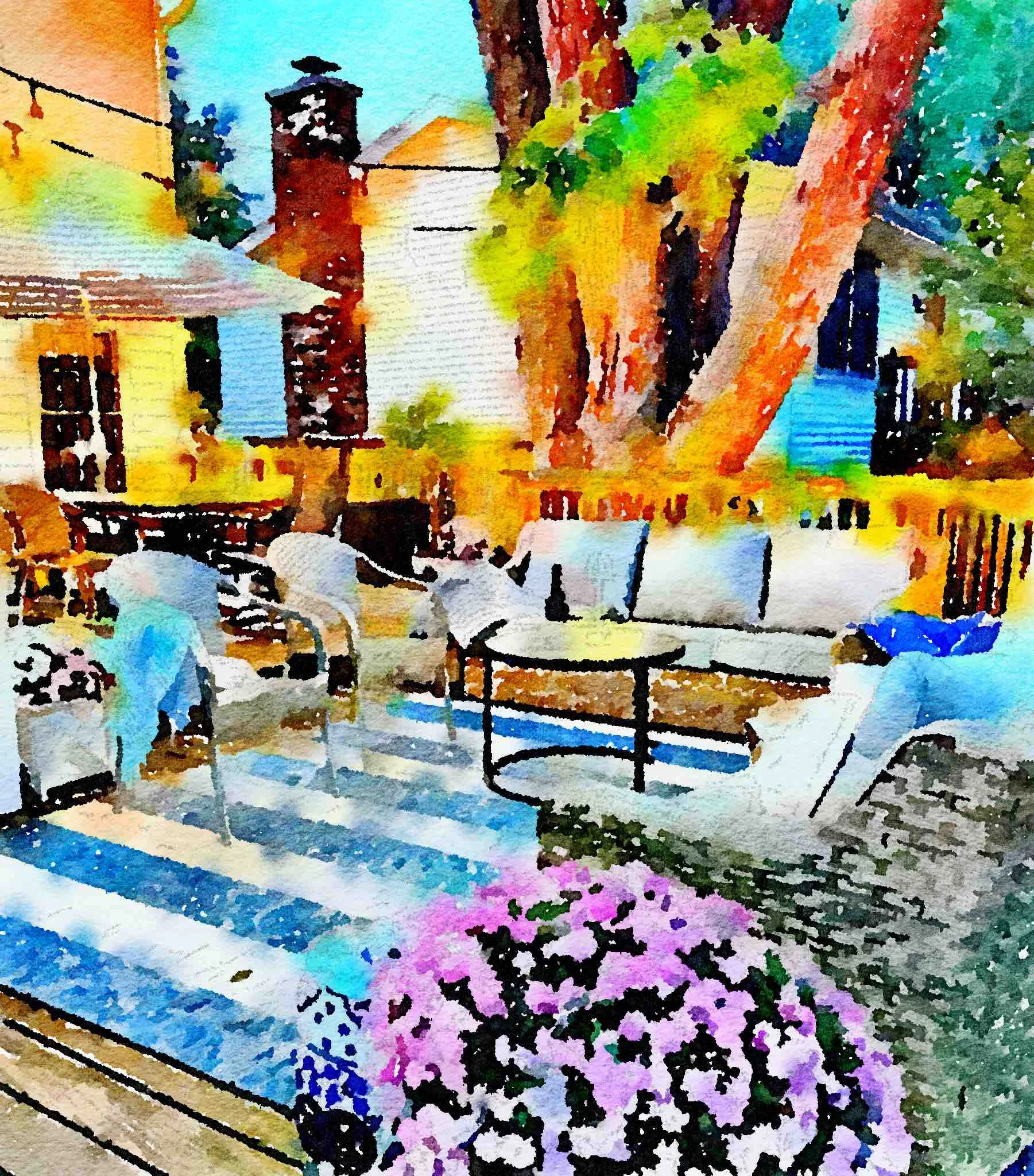
Pick your anchor piece before you pick a single planter
Every space needs one anchor, the piece everything else gets built around. Inside, that's a sofa or a bed. Outside, it's usually the dining table, the lounge seating, or, if you're being honest about your family, the play structure. Choose your anchor first. Then build zones around it instead of scattering furniture and toys until something looks balanced.
Action step: Walk your yard and name the one piece that has to go in first. If you can't name it, that's the actual problem, not the lack of cute accessories.
Use visual hierarchy to separate kid space from adult space
A fence isn't the only way to draw a boundary. Visual hierarchy does the same job without making your backyard look like a daycare. A pergola or pavilion over the adult lounge area signals it’s a calm zone. A defined border of cedar or stone around the play area signals it’s where the play happens. Your eye reads the difference instantly, no signage required.
Action step: Pick one material (stone, cedar, gravel) and use it to frame both zones differently. Consistency in material, contrast in form, is what makes a yard read as designed instead of accidental.
Run every material through the kid-proof scorecard
Durable doesn't mean ugly, and it definitely doesn't mean plastic. Before you buy a single piece of outdoor furniture, score it against three things:
Does it wipe clean in under a minute?
Is it actually rated for your climate, not just outdoor adjacent?
Will it still look intentional in three years, or is it trend-driven and headed for the curb?
Teak, powder-coated aluminum, and sustainably sourced hardwood pass this test. So do performance fabrics like Sunbrella in a ticking stripe or a linen-look weave. A removable, washable slipcover in a neutral tone earns bonus points because it hides sunscreen and popsicle stains without you having to think about it.
Action step: Before your next outdoor purchase, run it through all three questions. If it fails one, keep looking.
Treat the play structure like architecture, not an afterthought
A plastic playset dropped in the middle of the lawn fights your home's style every single day. A cedar playhouse painted to match your siding doesn't. The structure itself isn't the problem. Treating it like a separate category from the rest of your design is.
If your lot allows it, tuck a treehouse or a small climbing feature made from reclaimed stone into a hidden nook. It adds adventure without competing with your main entertaining space.
Action step: Before you buy a play structure, ask whether it can be painted, stained, or modified to match your home's palette. If the answer is no, keep shopping.
Let nature do double duty
Kids want to dig, plant, and explore. Raised garden beds where they can grow strawberries or herbs give them that outlet while adding texture to your landscape. A small rock garden, water table, or pebble-and-moss sensory path does the same thing.
Action step: Edge any kid-focused garden bed with the same material used in your hardscaping elsewhere. That's the detail that keeps it from looking like a separate, bolted-on feature.
If it's not contained, it's clutter
Outdoor clutter is the fastest way to undo every decision you just made. Built-in bench storage, cabinetry along an outdoor kitchen, or a pool house with labeled bins keeps gear accessible to kids without it living on your patio floor.
Action step: Get woven, lidded, outdoor-rated baskets for bubbles, chalk, and pool toys. If a toy doesn't have an assigned container, it doesn't have a home in your yard, and that's exactly why it keeps ending up in the middle of the lawn.
Light it for safety first, ambiance second
Layered lighting, lanterns, string lights, and low-voltage path lights, does two jobs at once: it keeps evening play visible and it makes the space feel finished after dark. Moonlighting fixtures placed high in trees throw a soft, natural-looking glow down onto the yard. LED stepping stones add a little magic without adding a single safety hazard.
Action step: Add one layer of safety lighting and one layer of ambiance lighting. Don't try to combine them into a single fixture; you'll undershoot both.
Build for all four seasons, not just summer
A firepit, a heated patio surface, or a covered area with a movie screen and real seating turns your backyard into a year-round room instead of a three-month rental. Add a hammock or a sculptural swing in a shaded spot for quiet reading time, because every kid zone needs an off-switch too.
A kid-friendly backyard and a stylish one aren't competing goals. They're the same goal, executed in the right order: anchor, zone, then layer in the details. Skip the order and you end up redoing it in two years.
If you're standing in your yard right now with no idea where to even start, that's exactly the gap Finally Finished: A Forever Home Blueprint is built to close. It walks you through the same anchor-first, zone-by-zone process room by room, indoors and out, so you stop guessing and start finishing.