How to Design an Outdoor Living Space That Feels Like a Vacation
Often backyard design is an afterthought. A patio set shoved against the house, a rug that's seen better days, string lights that stopped working two summers ago. The problem is almost never budget. It's the absence of a plan. Treat your outdoor space like a room in your home, and it becomes one of the most-used spaces on your property. Here's how to design it intentionally.
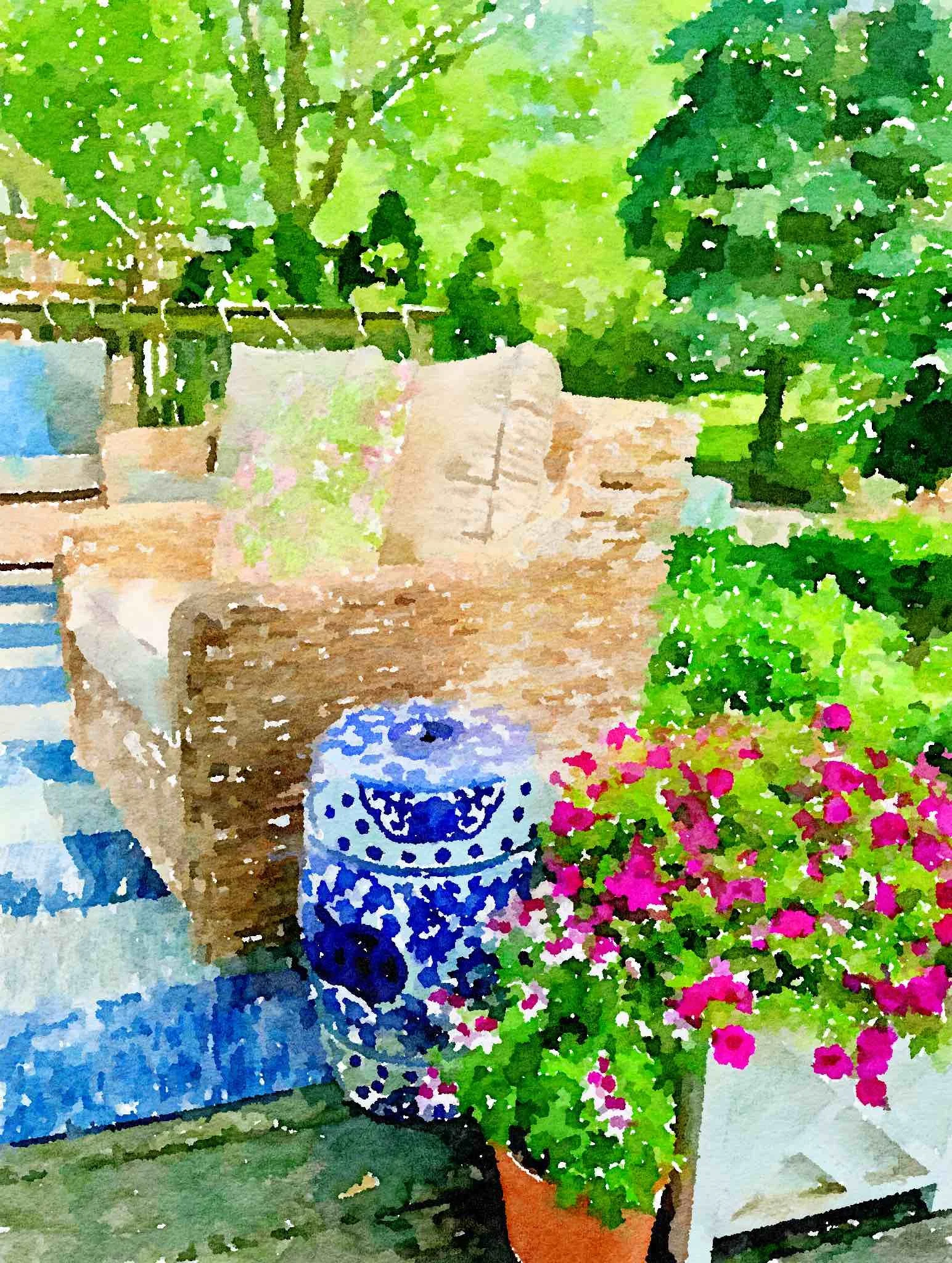
Start with a layout before you buy anything
Pull out a tape measure and design the outdoor space to scale, just like you would an interior room. Note where the doors are, where the sun hits hardest at midday, where the natural shade falls. Then decide on your zones: a seating area for conversation, a dining area if you eat outside, and a transition zone near the door for shoes, drinks, or a potting bench.
Use painter's tape on the patio surface to block out furniture footprints before ordering anything. Outdoor sofas run large, and scale is just as easy to misjudge outside as it is inside.
Buy furniture that will last more than one seasaon
Outdoor furniture is a real investment, and low-quality pieces will look worn within two seasons. Stick to materials built to last: teak, powder-coated aluminum, weatherproof wicker, concrete, or recycled composite. These hold up to sun, rain, and freezing temperatures without warping, rusting, or fading.
Coordinate with the indoor room it connects to
Whichever interior room opens onto your outdoor space, pull two or three colors from it and carry them outside. If your family room has blues, olive, and cream tones, repeat those in your outdoor cushions, rug, and planters. The visual connection between inside and outside makes both spaces feel larger and more intentional.
Select an outdoor rug that anchors the seating area, just as you would inside. All front legs of the seating should sit on the rug at minimum. Size up if you're between two options.
Add one upgrade that changes how you use the space
A single well-chosen upgrade can dramatically shift how much time you spend outside. Pick one based on how you actually live. A pergola or sail shade extends usable hours when the sun is strong. An outdoor fireplace or fire pit adds months to your season on both ends. An outdoor kitchen with even a simple prep counter and small fridge changes how you entertain entirely.
Pick the one upgrade that would remove the biggest obstacle between you and being outside more often. Start there.
Build a lighting plan for after dark
Most outdoor spaces go dark at sunset and get abandoned. A layered lighting plan fixes that. Combine three types: ambient lighting overhead (string lights, a pendant under a pergola), task lighting for dining and cooking areas, and accent lighting for pathways and landscaping.
Solar lanterns and pathway lights handle a lot of the work without running electrical. Smart bulbs on a simple outdoor fixture let you adjust the mood without going back inside. Warm-toned bulbs in the 2700K range create the most inviting atmosphere after dark.
An outdoor space designed with the same care as an interior room pays for itself in how you live, lounge and entertain.