How to Display Kids' Artwork Without Making Your Home Look Like a Classroom
Your child hands you a painting at 7 p.m. on a Tuesday. It's bright orange, it has six arms, and they are so proud of it they might burst. You love it. You also have no idea what to do with it.
So it goes on the refrigerator, or gets taped to the wall next to three other pieces, or gets shuffled into a pile on the counter that you'll deal with later. Your home starts to look like a preschool hallway, and you feel guilty even noticing that.
You're allowed to love your kids' art and still want your home to look good. Two things can be true. You just need a system.
The refrigerator is not a display strategy
It's a holding zone. Treat it like one. Let new artwork live there for a week or two while you decide what to do with it, then make an actual decision: frame it, store it, or let it go. Letting artwork accumulate on the fridge or in a pile isn't honoring it. It's just postponing the decision.
Use real frames & matting
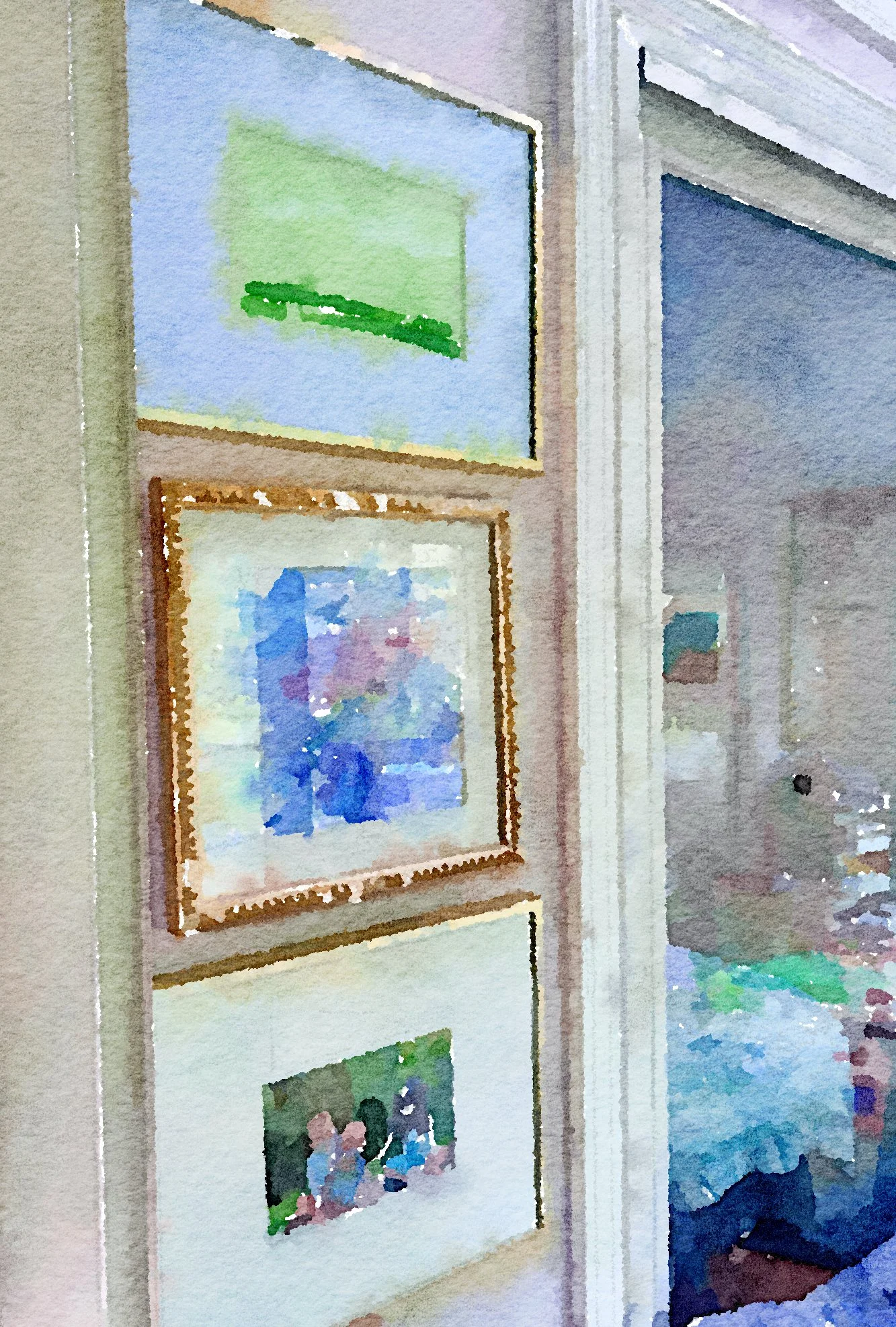
The fastest way to make kids' artwork look intentional is to put it in a real frame. A child's watercolor painting in a simple black frame looks like art. The same painting taped to the wall looks like clutter. The frame is doing all the work.
You don't need expensive frames. Buy a set in one consistent finish and stick to it. Custom cut matting will help maintain consistency with different sized art. Consistency is what makes a collection look curated instead of chaotic.
Create one dedicated display zone
Rather than letting artwork migrate to every surface and wall in your home, choose one place where kids' art lives. A single gallery wall in the hallway. A ledge in the playroom. A framed rotating display in the kitchen. When art has a home, it feels like a feature. When it's everywhere, it feels like it took over.
Try a rotating gallery instead of a permanent one
Clip frames and art ledges exist specifically for this. You swap out what's on display every month or season, which means your kids see their work honored, you're never stuck with the same orange painting for three years, and your walls stay intentional. This is also a great way to get kids involved in curating their own space.
Actionable setup: Hang one long ledge in a hallway, painted the same color as your wall so it reads as architectural rather than furniture. Lean five to seven framed pieces on it. Swap seasonally.
Scale matters more than you think
One large piece of children's artwork, properly framed, can anchor a wall the same way a purchased print would. Stop treating kids' art as inherently small and decorative. If your seven-year-old painted something on a large piece of paper, frame it large. Give it real wall space. It will stop the room.
Build a system for the pieces you don't display
Every piece that comes home deserves a decision, display or store. For storage, a simple flat file or large portfolio folder keeps artwork organized and protected. Taking a photo of each piece before storing or letting it go means you have a record without the physical pile.
Your home works best when everything in it has a place and a purpose. Your childs’' artwork is no different.