You're Neither a Minimalist Nor a Maximalist. Here's How to Decorate.
Most decorating advice assumes you've already picked a side. Either you're the person with white walls and three objects on a shelf, or you're the person with gallery walls, layered rugs, and a collection of vintage ceramics covering every surface.
But most of us live somewhere in the middle, and that middle has no name, no Pinterest aesthetic, and almost no guidance. So you end up frozen, buying things you half-love, arranging them in ways that feel fine but never quite finished. However, the middle ground is actually where the best homes live. You just need a framework for it.
Create a filter
Minimalists have a filter: if it's extra, it goes. Maximalists have a filter too: if it brings joy and tells a story, it stays. When you're neither, you have no filter at all, which means everything stays, nothing has intention, and your home ends up looking like a waiting room you've lived in for years.
If you’re hovering in this middle ground, the first step is to build your own filter. Start with this question: does this item earn its place? Earning a place means it's either functional, meaningful, or genuinely beautiful to you. If something is just there because it’s moved around with you or you've never gotten around to donating it, that's not your filter, it’s indecision.
Give every room a visual anchor
In homes that feel pulled together without being stark, there's always one thing in each room that commands attention. A sofa in a strong color. A piece of artwork that takes up real wall space. A dining table that feels substantial. Everything else in the room supports that anchor rather than competing with it.
If your room has six things fighting for attention, nothing wins. Pick your hero piece first, then build around it.
Use the Rule of Enough
Minimalism says less is more. Maximalism says more is more. You need something in between: enough. Enough means the room feels full and lived-in, but your eye has somewhere to rest. Practically, this looks like:
Bookshelf styled with books plus a few objects, with some breathing room between groupings
A coffee table with a tray, a stack of two or three books, and one small object
Walls with art hung intentionally, with at least one wall left clear
Surfaces that have purpose: a lamp, something living (a plant, flowers), and one personal item
Your color palette is doing more work than you think
Homes in the middle ground tend to accumulate color without realizing it. A blue throw here, a green plant pot there, a terracotta lamp, a pink candle. Individually, they're all fine. Together, they're chaos.
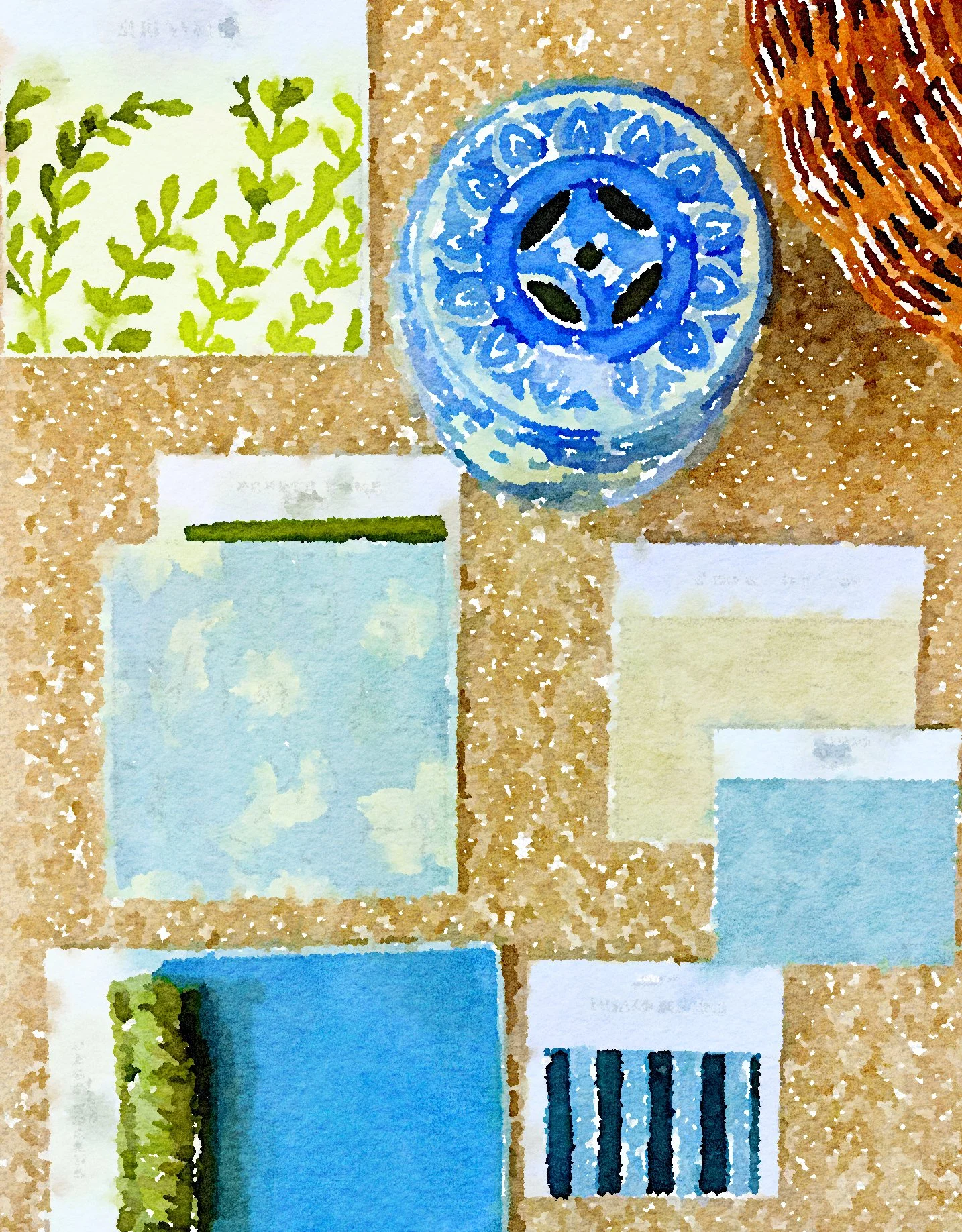
Limit yourself to three colors in a room, plus neutrals. One dominant, one secondary, one accent. When everything else is chaos, your color palette will create coherence.
The goal for your home is that everything in it is there because you put it there deliberately. You chose it, placed it and you know why it's there. Finished doesn't require a label or an aesthetic, it just requires intention.